


What is carpal tunnel syndrome?
- benwilliams801
- Apr 28
- 2 min read

Understanding Carpal Tunnel Syndrome: Symptoms and Treatment
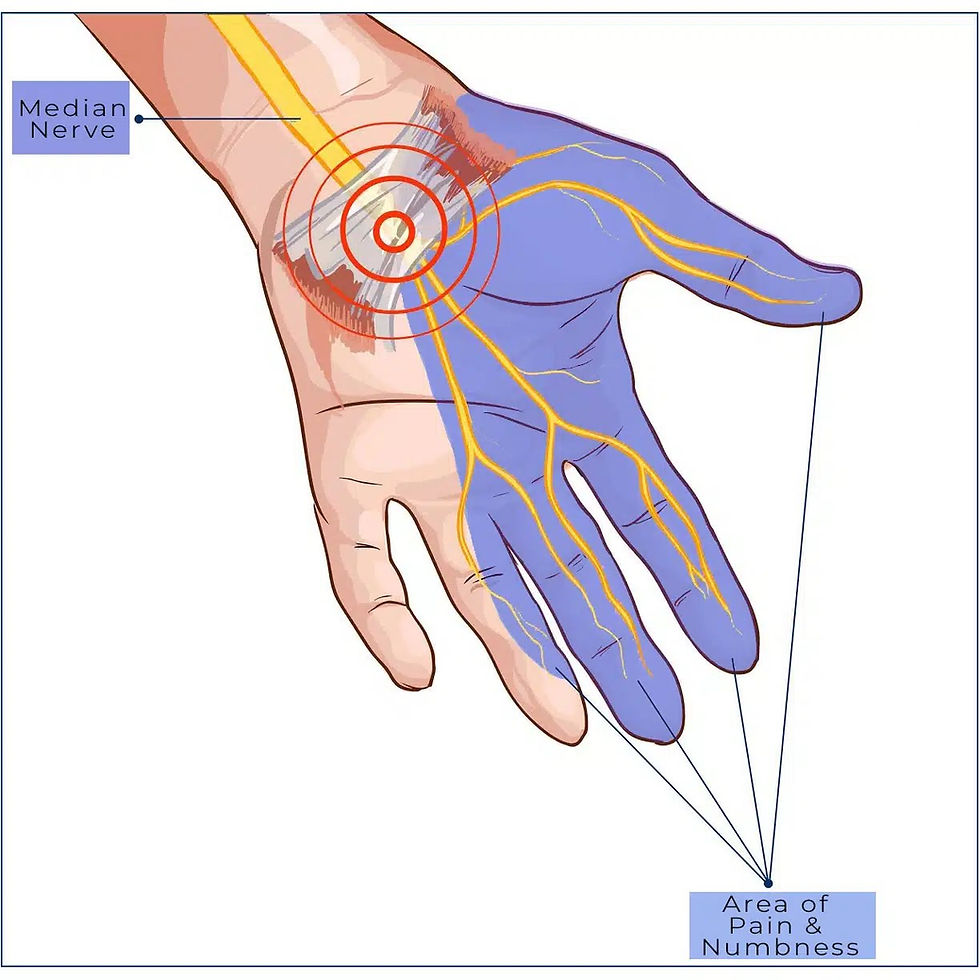
Carpal tunnel syndrome (CTS) is one of the most common hand conditions, occurring when the median nerve—which runs from your forearm through a narrow passageway in your wrist—becomes compressed. Think of the carpal tunnel as a "tunnel road" through your wrist bones; when the space inside this tunnel narrows, it puts pressure on the median nerve, leading to pain, numbness, and tingling in the hand and fingers.
What are the symptoms?
Symptoms of CTS typically develop gradually and often affect the thumb, index, middle, and ring fingers. Common signs include:
Numbness or a "pins and needles" tingling sensation.
Pain that may travel from the wrist up into the arm.
Weakness in your grip, often causing you to drop objects.
Symptoms that are worse at night, sometimes waking you from sleep.
Why does it happen?
The increase in pressure on the median nerve can be caused by multiple factors. While it is often difficult to pinpoint a single cause, conditions like repetitive hand movements, pregnancy, and arthritis can contribute to swelling inside the wrist. Because the median nerve provides sensation and motor function to the thumb and most of your fingers, even minor compression can significantly impact your daily comfort and hand function.
What are the treatment options?
If you are experiencing symptoms, early intervention is key. Treatment is usually tailored to the severity of your condition and may include:
Nonsurgical care: Initial treatments often focus on resting the hand, using wrist splints (especially at night), activity modification, and ergonomics, such as adjusting your keyboard position. In some cases, a corticosteroid injection can help reduce inflammation and provide relief.
Surgical care: For severe cases, or when nonsurgical options do not provide adequate relief, a carpal tunnel release procedure may be recommended to ease the pressure on the nerve. This surgery is highly effective and can be performed using either traditional open or endoscopic techniques.
If you are concerned about persistent numbness or hand weakness, it is best to have it evaluated by a specialist who can provide an accurate diagnosis and discuss the most appropriate path forward for your specific needs.

Comments